From >> https://note.com/tuatdaizukan/n/nda896f455075
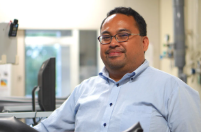
「実世界につながる工学」— Bisri先生が語る材料物理の魅力
化学物理工学科の Bisri先生 は、「自分の研究成果が実際の社会で使われる瞬間」に価値を感じ、材料物理(Materials Physics) を基盤に、量子ドット・ナノ材料・光電子デバイスなどの研究を行っています。
◆ 子どもの頃の夢はパイロット。そこから工学へ
幼い頃はパイロットに憧れていたBisri先生。視力の問題もあり夢は変わったものの、飛行機そのものを作りたいという思いから工学へ興味が広がり、やがて材料物理の面白さに惹かれていきました。
材料物理は、
- 機体の温度を測るセンサー
- 客室窓の電子シェード
- CFRPなどの構造材料
など、航空機にも数多く応用されています。
「知識や技術が思わぬところで飛行機や宇宙の分野とつながる。それが材料物理の面白さです。」
◆ “目の前で光る”瞬間 — 研究者としての原体験
大学院時代、測定装置(グローブボックス)のカーテンを開けた瞬間、有機半導体が強く光っていたことを目視で発見。顕微鏡では捉えられなかった側面発光でした。
「努力が報われた瞬間でした。
目の前で光が現れたとき、研究者になってよかったと思いました。」
◆ 化学物理工学科だからできる研究
Bisri研究室には、化学系と物理系の学生が半々の割合で在籍しています。コロイド量子ドットの研究には化学、量子ドット超格子の電気特性には物理が必要であり、“両方がそろう環境”が研究の強みです。
◆ 未来へ広がる材料物理
材料物理の成果は、数百年後ではなく、「自分が生きているうちに社会に形として現れる」可能性が強い分野。
先生は夢を語ります:
- コロイド量子ドットを使った次世代量子コンピュータ
- 火星基地で使われるナノ材料の開発
- 宇宙での量子デバイス応用
研究の裾野は地球から宇宙まで広がっています。
◆ 高校生へのメッセージ
「SNSの情報を鵜呑みにせず、自分の価値観で選択してください。
そして“日本にいるからこそできる研究と環境”を大切に。
人とのつながりも必ずあなたの未来を支えます。」
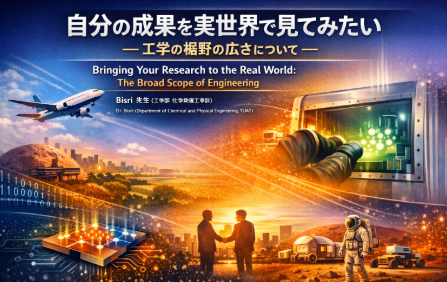
“Engineering That Reaches the Real World” —
Dr. Bisri Talks About the Joy of Materials Physics
Dr. Bisri explores materials physics, focusing on colloidal quantum dots, nanomaterials, and optoelectronic devices.
His motivation is simple and powerful:
“I want to see my research contribute to the real world.”
◆ From childhood dreams of flying to engineering
As a child, Dr. Bisri dreamed of becoming a pilot. Although that path changed, the desire to build aircraft led him into physics and eventually into materials physics.
Today, materials physics contributes to many aerospace technologies:
- Temperature‑monitoring sensors
- Smart electron‑shaded aircraft windows
- CFRP and other advanced composites
Materials physics unexpectedly connects to aviation and even space.
◆ The moment the semiconductor lit up
As a graduate student, he observed an organic semiconductor glowing brightly— a signal invisible through the microscope but clearly visible when he lifted the protective curtain.
“That moment of light was unforgettable. Hard work becoming real—that’s the joy of research.”
◆ Why TUAT and this department?
The Bisri Lab is unique: about half the students come from “chemistry” and half from “physics”.
Both are essential for research on colloidal quantum dots and their electronic properties.
This interdisciplinary environment is what drew Dr. Bisri to TUAT.
◆ The future of materials physics
Dr. Bisri envisions applications such as:
- Colloidal‑quantum‑dot‑based quantum computers
- Nanomaterials made from Martian soil for future space stations
- Quantum devices operating in extreme environments
Materials physics offers possibilities that reach far beyond Earth.
◆ Message to high‑school students
“Choose information carefully.
Think globally about what only you can do from Japan.
And value your relationships—people will guide your future.”