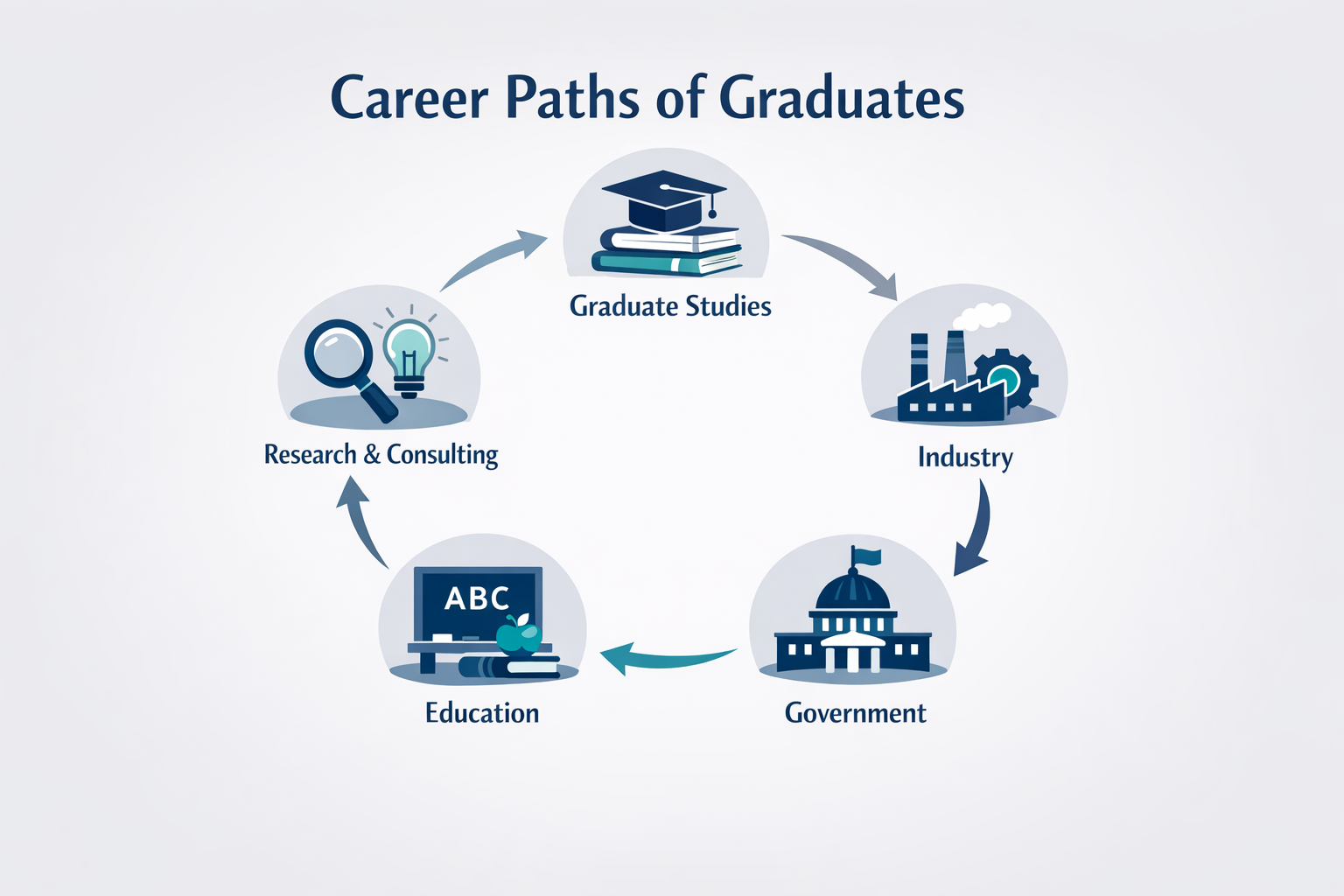
多様なフィールドへ広がる化学物理工学科のキャリアパス
化学物理工学科は、2019年にスタートした学科です。卒業生・修了生の進路の幅広さと多様性として表れています。
本記事では、2023年3月~2026年3月卒業・修了生を対象に、学部・大学院修士課程それぞれの進路状況をご紹介します。
学部卒業生の進路:高い大学院進学率と多様な選択
大学院進学状況
学部卒業後に大学院博士前期課程(修士課程)へ進学する学生が多数を占めます。
- 学部卒業生の約80~90%が大学院へ進学
- 進学先の多くは
- 本学大学院工学府・化学物理工学専攻
- 本学大学院・先進学際科学府(AIS)
- 大学大学院工学府・院産業技術専攻
- 他大学(東京大学、東京科学大学、東北大学、筑波大学、横浜国立大学、海外大学院など)への進学実績もあり
(データ出典:2023年3月~2026年3月 学部卒業生実績)
学部卒業後すぐに就職する進路
学部卒業後、修士課程へ進学せずに社会で活躍する道を選ぶ卒業生も毎年一定数います。
主な就職分野(抜粋)
- 製造業・技術系
- SUBARU、富士通、三菱ケミカルエンジニアリング
- 三菱プレシジョン、スタンレー電気、日清紡マイクロデバイス など
- 情報・サービス
- 日本総合研究所、アイヴィス、コムチュア、エン・ジャパン など
- 公務員・教育
- 東京都庁、大阪府庁、水戸市役所、中等・高等学校教員 など
学部教育段階から、材料・プロセス・データ・システムを横断する力が、産業界や公共分野で評価されています。
修士課程修了生の進路:専門性を活かした社会展開
修士課程修了者の概要
- 2025年3月:第1期修士修了生(60名)
- 2026年3月:第2期修士修了生(66名)
化学物理工学専攻、BASE(AIS)、産業技術専攻修了生を含みます。
博士後期課程への進学
- 本学大学院 博士後期課程(工学府化学物理工学専攻、BASE学府 など)
- 東京科学大学など他大学への博士進学
研究と社会の橋渡しを担う高度専門人材としてのキャリアも形成されています。
修士修了生の主な就職分野と進路(抜粋)
化学・素材・石油
AGC、レゾナック、出光興産、三井化学、積水化学工業、ENEOS、丸善石油化学、日油、クレハ、花王、JX金属 など
電気・電子・精密機器・情報通信
富士フイルム、リコー、三菱電機、キーエンス、横河電機、パナソニック、デンソー、ウエスタンデジタル、テルモ、カシオ計算機 など
機械・プラント・エンジニアリング
小松製作所、千代田化工建設、日揮、東洋エンジニアリング、JFEエンジニアリング、清水建設、竹中工務店 など
エネルギー・インフラ
東京電力ホールディングス、東京電力パワーグリッド、電源開発(J-POWER)、東京ガスエンジニアリングソリューションズ など
情報・コンサルティング
アクセンチュア、PwCコンサルティング、デロイト トーマツ コンサルティング、アビームコンサルティング、大和総研、日本総合研究所 など
公務員・教育
国土交通省(国土地理院・関東地方整備局)、東京都職員、中等・高等学校 など
(注:上記は代表例です)
まとめ:「選択肢の広さ」
化学物理工学科の教育の最大の特徴は、「進路を狭めない専門性」にあります。
- 修士・博士として研究を極める道
- 素材・化学・電機・機械・エネルギー産業で技術者として活躍する道
- 情報・コンサルティング分野で課題解決に挑む道
- 社会基盤を支える公務員・教育者としての道
これらすべてが、物理工学 × 化学工学 × 学際融合という学びから自然に広がっています。
高校生・在学生の皆さんへ。
- 化学物理工学科での学びは、皆さんの将来の可能性を一つに限定しません。
- 私たちは、皆さんが自らの志向に応じて多様な社会フィールドへ羽ばたけるよう、今後も教育・研究の充実に取り組んでいきます。
Diversity of Outcomes from the Department of Applied Physics and Chemical Engineering
Established in 2019, the Department of Applied Physics and Chemical Engineering is the only department in Japan that systematically integrates Applied Physics and Chemical Engineering within a single curriculum. Through this unique interdisciplinary education and research environment, the department has continuously produced graduates who are able to contribute to a wide range of sectors in academia, industry, and the public domain.
This page presents an overview of the career paths of our Bachelor’s and Master’s graduates from March 2023 through March 2026, highlighting the diversity and flexibility of outcomes made possible by our program.
Career Paths of Bachelor’s Graduates
High Rate of Progression to Graduate School
A defining feature of our department is the strong tendency of undergraduate students to continue to graduate-level studies.
- Approximately 80–90% of Bachelor’s graduates progress to Master’s programs each year.
- The majority enroll in graduate programs at our university, including:
- Applied Physics and Chemical Engineering Program (Graduate School of Engineering)
- Graduate School of Advanced Interdisciplinary Science and Engineering (formerly BASE, now AIS)
- Industrial Technology Programs (Graduate School of Engineering)
- A number of students continue their studies at other leading universities in Japan or overseas, demonstrating the broad academic recognition of the department’s training.
These figures clearly indicate that the undergraduate curriculum provides a solid and versatile foundation for advanced research and specialization.
Direct Employment after the Bachelor’s Degree
While most students proceed to Master’s programs, a consistent group of graduates choose to enter the workforce immediately after earning their Bachelor’s degree.
Representative employment sectors include:
- Manufacturing and Engineering
- Automotive, electronics, chemical engineering, and precision device companies
- Information Technology and Services
- Systems engineering, consulting, and data-related services
- Public Service and Education
- Local and metropolitan government
- Secondary education (science and technology teachers)
These outcomes reflect the practical engineering skills and problem-solving mindset cultivated at the undergraduate level.
Career Paths of Master’s Graduates
Overview of Master’s Graduates
- March 2025: First cohort of Master’s graduates
- March 2026: Second cohort of Master’s graduates
Graduates come from the Applied Physics and Chemical Engineering program as well as closely related interdisciplinary programs, forming a highly diverse academic and technical talent pool.
Progression to Doctoral Programs
A portion of Master’s graduates have advanced to doctoral (PhD) programs, both within our university and at other institutions in Japan.
These students pursue careers in advanced research, contributing to academia, industry–university collaboration, and long-term technological innovation.
Employment of Master’s Graduates: Breadth of Fields
Master’s graduates from our department have secured positions across a remarkably wide range of industries, demonstrating the power of interdisciplinary training.
Chemicals, Materials, and Petroleum
Major employers include companies specializing in specialty chemicals, advanced materials, energy, and process industries. Representative examples include:
- AGC Corporation
- Resonac Holdings Corporation
- Idemitsu Kosan Co., Ltd.
- Mitsui Chemicals, Inc.
- Sekisui Chemical Co., Ltd.
- ENEOS Corporation
- Maruzen Petrochemical Co., Ltd.
- NOF Corporation
- Kureha Corporation
- Kao Corporation
- JX Advanced Metals Corporation.
Electrical, Electronics, Precision Instruments, and ICT
Graduates contribute to sectors such as electronics, sensors, medical devices, semiconductors, and information systems. Representative examples include:
- Fujifilm Corporation
- Ricoh Company, Ltd.
- Mitsubishi Electric Corporation
- KEYENCE Corporation
- Yokogawa Electric Corporation
- Panasonic Holdings Corporation
- DENSO Corporation
- Western Digital Technologies, Inc.
- Terumo Corporation
- CASIO Computer Co., Ltd.
Machinery, Plant, and Infrastructure Engineering
Representative examples include:
- Komatsu Ltd.
- Chiyoda Corporation
- JGC Corporation
- Toyo Engineering Corporation
- JFE Engineering Corporation
- Shimizu Corporation
- Takenaka Corporation
Energy and Utilities
Representative examples include:
- Tokyo Electric Power Company Holdings, Inc. (TEPCO)
- Tokyo Electric Power Grid Co., Inc.
- J-POWER (Electric Power Development Co., Ltd.)
- Tokyo Gas Engineering Solutions Corporation
Consulting, Research, and Professional Services
Representative examples include:
- Accenture Japan Ltd.
- PwC Consulting LLC
- Deloitte Tohmatsu Consulting LLC
- ABeam Consulting Ltd.
- Daiwa Institute of Research Ltd.
- Japan Research Institute, Limited (JRI)
Government and Education
Representative examples include:
- Ministry of Land, Infrastructure, Transport and Tourism (MLIT), Japan
- Geospatial Information Authority of Japan (GSI)
- Tokyo Metropolitan Government
- Public Secondary Schools (Science and Engineering Education)
Key Message: An Education That Expands, Not Restricts, Career Options
The greatest strength of the Department of Applied Physics and Chemical Engineering lies in the breadth of career options available to its graduates.
Our integrated approach—combining physics-based understanding, chemical engineering principles, and interdisciplinary problem-solving—allows students to:
- Pursue advanced research at the doctoral level
- Become engineers and specialists in manufacturing, energy, and high-tech industries
- Apply scientific expertise in information technology and consulting
- Contribute to society through government service and education
Rather than narrowing future possibilities, our education is designed to keep multiple pathways open, empowering students to choose careers aligned with their interests and talents.
We remain committed to supporting students as they develop into professionals capable of making meaningful contributions across diverse sectors of society.
This page summarizes representative trends and examples drawn from graduates between March 2023 and March 2026.