牛ふんと植物系バイオマスを一緒に分解すると何が起きる?
— メタン発酵でわかる“紙・ワラ・木”の違い —
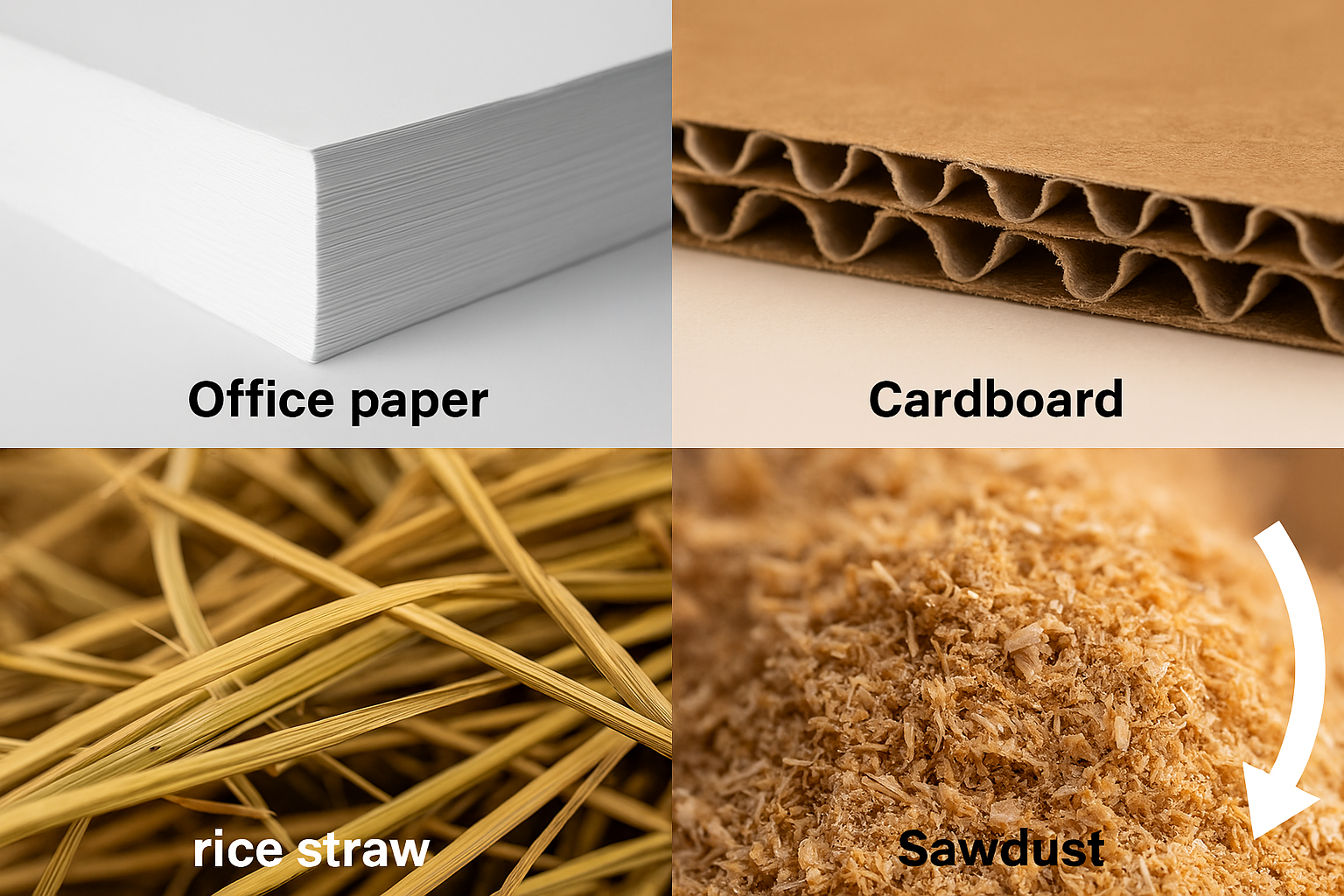
私たちの身のまわりには、紙・段ボール・稲わら・おが屑など、植物由来の“リグノセルロース系バイオマス”がたくさんあります。これらは再生可能資源として期待されていますが、発酵によるエネルギー変換には「分解されやすさ(加水分解性)」が大きく関わります。
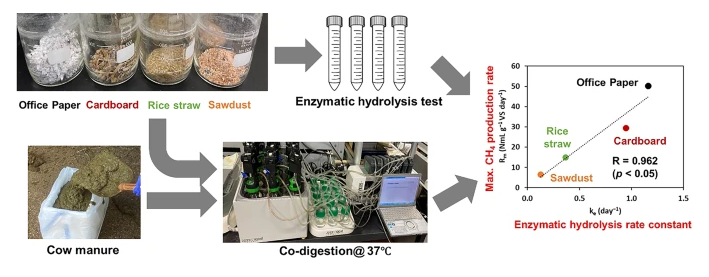
利谷准教授らの研究では、牛ふんと4種類のバイオマス(オフィス紙、段ボール、稲わら、おが屑)を一緒にメタン発酵させ、
- どれだけメタンが出るか(収量)
- どれくらいの速さで出るか(生成速度)
- どのバイオマスが分解されやすいか
を比較しました。
🔍 主なポイント
- 紙類が最も分解されやすく、メタンも多く出る
→ 紙 > 段ボール > 稲わら > おが屑 - リグニンが多いほどメタン収量は低い
→ リグニンは分解されにくい“頑固な壁”のような成分 - セルロース+ヘミセルロースの割合が高いほど、メタン生成速度が高い
- 加水分解の速さ(酵素・発酵両方)が、メタン生成に大きく影響
→ “分解のしやすさ”がボトルネック
💡 高校生へのメッセージ
紙や植物が同じ「バイオマス」でも、中の成分の違いでエネルギーとしての利用価値が大きく変わることがわかります。
化学・生物・環境工学が組み合わさって進む研究で、再生可能エネルギーの未来を切り開いていきます!
Riya, S., Nitta, T. & Terada, A. Effect of the Composition and Hydrolyzability of Lignocellulosic Biomass on Methane Productivity in Co-Anaerobic Digestion of Lignocellulosic Biomass and Cow Manure. Waste Biomass Valor 17, 575–584 (2026). https://doi.org/10.1007/s12649-025-03142-1
🌍
What Happens When Cow Manure and Biomass Are Digested Together?
— Understanding How Paper, Straw, and Wood Behave in Methane Production —
Lignocellulosic biomasses such as office paper, cardboard, rice straw, and sawdust are renewable resources. However, their usefulness for biogas production depends heavily on how easily they can be broken down, especially during anaerobic digestion.
A research team led by Dr. Shohei Riya examined co-digestion of cow manure with four biomass types and analyzed:
- Methane yield
- Maximum methane production rate
- Hydrolysis characteristics (both enzymatic and anaerobic)
🔑 Key Findings
- Paper-based biomass produced the highest methane yield and fastest production rate, followed by cardboard, rice straw, and sawdust.
- Higher lignin content led to lower methane yield, as lignin is highly resistant to degradation.
- Methane production rate correlated strongly with cellulose + hemicellulose content, which are easier-to-hydrolyze carbohydrates.
- Both enzymatic hydrolysis rate and anaerobic hydrolysis rate were closely linked to methane production, showing that hydrolysis is the rate-limiting step.
🎓 Message to Students and Researchers
Even among materials that all come from plants, their internal chemical composition makes a major difference in renewable energy applications.
This study demonstrates how chemical engineering, biotechnology, and environmental science come together to advance sustainable energy technologies.